
Kenya’s Youth and Future of Work: Key Lessons from World Youth Skills Day 2026
Posted by OAY Kenya on 21-Jul-2026
"The future belongs to those who prepare for it today." It's a phrase we hear often at conferences, in classrooms, and in motivational speeches. But on the morning of 15 July 2026, as hundreds of young people streamed through the doors of the Kenyatta International Convention Centre (KICC) for the World Youth Skills Day 2026 and the 4th Edition of the Skill Up Africa Summit, that statement felt less like a cliché and more like a question.
What does preparation really look like when you're young, ambitious, and living in a world that's changing faster than ever?
For two days, the summit, organized by Nation Media Group under the theme Future Skills, Innovation and Opportunity for Kenya's Youth, brought together government leaders, educators, entrepreneurs, development partners, and industry experts. There were keynote speeches, panel discussions, exhibitions, product demonstrations, and policy launches, but beyond the microphones and official program was a different story. It was the story of young Kenyans searching not just for jobs, but for direction, opportunity, and a place in a future that often feels uncertain.
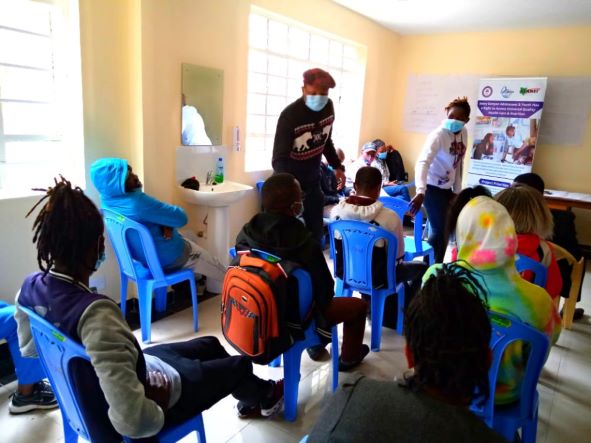
Among those young people were representatives from grassroots organizations under the Sheria Ya Vijana project, who attended the summit through the Organization of African Youth (OAY) Kenya. Their presence was a reminder that youth participation is about connecting young people to real opportunities, practical knowledge, and networks that can shape their communities long after the event has ended.
Every Seat Held a Different Dream
Walking into the conference hall, one thing became immediately clear: no two people were there for the same reason. A university graduate hoped to understand why sending out dozens of job applications had led nowhere, while a TVET student wanted to know whether artificial intelligence would replace the career they were preparing for. A young entrepreneur searched for funding that could finally turn an idea into a business, and a content creator sought to discover how technology could expand their audience. Others simply wanted reassurance that their future still had room for them in an increasingly competitive world.
The conversations in the hallways revealed a generation that is not short of ambition, creativity, or determination. What many young people lack are opportunities, exposure, and the confidence that they are building the right skills for a rapidly changing world. That realization shaped nearly every discussion throughout the summit, where speakers repeatedly returned to the urgent need to bridge the gap between education, employability, and the realities of the modern labour market.
Skills Are the New Currency
One message echoed consistently from speaker to speaker: the world of work is changing, and education alone is no longer enough. Employers are increasingly looking for people who can solve problems, adapt quickly, learn continuously, and apply knowledge in practical settings rather than relying solely on academic qualifications.
Cabinet Secretary Dr. Alfred Mutua, Principal Secretary Mr. Shadrack Mwadime, and leaders from institutions such as NITA, Huawei Kenya, and the Youth Enterprise Development Fund emphasized that Kenya's future depends on preparing young people for industries that are expanding rather than those that are shrinking. The conversation shifted from simply earning certificates to developing competencies, and that distinction matters because a certificate may open a door, but skills determine whether someone can remain in the room, grow within it, and create value long after the first opportunity arrives.
Four Launches, One Vision
One of the defining moments of the summit was the launch of four national initiatives: the National Strategy on the Transformation of the Informal Economy, the Skills Gap Report, the Rapid Assessment of Skills Development Priorities in the Global Labour Market, and the National Work-Based Learning Award.
At first glance, policy documents can seem distant from everyday life, yet behind every report lies an important question: are we preparing young people for the jobs that actually exist? The Skills Gap Report seeks to answer that question by identifying the disconnect between available skills and market needs, while the Rapid Assessment highlights where opportunities are growing globally. The National Strategy recognizes the importance of strengthening Kenya's informal economy, where millions already earn a living, and together, these initiatives signal a shift toward evidence-based planning rather than assumptions.
Young participants also explored the Kenya Labour Market Information System, which provides data on employment opportunities across the country. Discussions around the system included the importance of the Data Protection Act and how labour market information can help young people make informed career decisions based on real opportunities rather than guesswork.
The National Employment Authority further emphasized the need for coordinated efforts to connect young people with available opportunities, while initiatives such as MGK Innovation (Inn2Win) showcased how innovation programmes can nurture entrepreneurial talent and support youth-led solutions.
Creating Employability
Employability is built long before someone signs an employment contract, and it develops through internships, industrial attachments, apprenticeships, volunteering, networking, and continuous learning. These experiences help young people gain confidence while giving employers evidence that they can perform in real working environments.
This philosophy came to life through the launch of the National Work-Based Learning Award, which recognizes organizations that invest in practical workplace learning. The initiative sends a powerful message that learning should not end in the classroom, because some of life's most valuable lessons happen on the job, where theory meets reality and skills are tested in everyday situations.
Participants also learned about Recognition of Prior Learning (RPL) through NITA, a process that allows individuals to have their existing skills formally recognized, even if those skills were acquired outside traditional education systems. For many young people, especially those in the informal sector, this recognition could open doors to employment and further training opportunities that were previously out of reach.
The Green Economy and Youth Innovation
While technology dominated many discussions, another important conversation unfolded throughout the summit: climate change is also reshaping the job market. Renewable energy, climate-smart agriculture, green manufacturing, environmental conservation, and sustainable infrastructure are creating careers that not only generate income, but also protect the environment.
For a generation inheriting the realities of climate change, green skills represent both responsibility and opportunity. They offer young people a chance to build livelihoods while contributing to a more sustainable future for their communities and the planet.
This conversation is particularly relevant to OAY Kenya's Sheria Ya Vijana project, which works with grassroots youth organizations to strengthen youth participation, innovation, and advocacy. Through the project, young people are being empowered to develop solutions that address both social and environmental challenges in their communities.
As part of this commitment, OAY Kenya is preparing for the 2nd Annual Kenya Youth Climate Action Innovation Summit, which will take place in Nairobi on 6th and 7th August 2026.
During the summit, the organization will recognize the Top 30 Under 30 Youth Green Innovators, celebrating young people who are leading impactful climate solutions across Kenya. The initiative aims to showcase youth-led innovations, connect young innovators with potential partners, and create a platform for scaling solutions that contribute to Kenya's green transition.
Entrepreneurship Begins Before Funding
Many young people believe the biggest obstacle to starting a business is money, but the summit challenged that assumption. Representatives from the Youth Enterprise Development Fund highlighted financing opportunities available to young entrepreneurs, while also emphasizing that funding alone is rarely enough.
Businesses need mentorship, innovation, market understanding, resilience, and continuous improvement if they are to survive and grow. Participants also learned about the NYOTA Fund, which seeks to support youth entrepreneurship and create pathways for young people to access financial opportunities.
Perhaps one of the most exciting proposals came from the Principal Secretary's vision of transforming TVET institutions into innovation and business incubation centres, where students could graduate not only with technical skills, but also with businesses already serving customers. That is a different kind of education, one that prepares young people not just to seek jobs, but to create them.
The Conversations Between Sessions
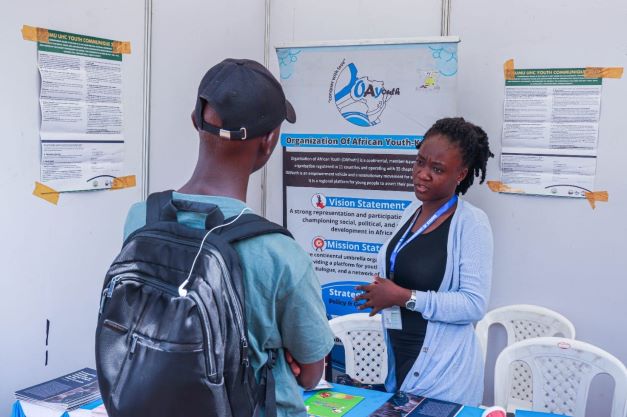
Some of the most valuable moments at conferences happen outside the conference hall, and this summit was no exception. During tea breaks, in exhibition spaces, between strangers introducing themselves for the first time, and around demonstration booths showcasing emerging technologies, young people asked questions, shared ideas, compared experiences, exchanged contacts, and discussed collaborations.
For the OAY Kenya delegates, these interactions were especially meaningful because they connected grassroots youth organizations with innovators, policymakers, and institutions that could support their work. Opportunities often begin with conversations, and networking is not simply about collecting business cards; it is about discovering people whose journeys intersect with yours, learning from their experiences, and recognizing that collaboration can open doors that individual effort alone may not.
A Lesson That Stayed Behind
Among all the policy discussions, technology demonstrations, and strategic plans, one simple truth remained: Kenya does not lack talented young people. What it lacks are enough opportunities for those talents to flourish, and that is a challenge that cannot be solved by young people alone.
The future of work is arriving faster than many expected, as artificial intelligence continues evolving, new industries emerge, old jobs disappear, and skills keep changing. Yet one thing became unmistakably clear over those two days at KICC: the future will not belong to those who know everything, but to those who never stop learning.
And perhaps that was the greatest lesson of the World Youth Skills Day 2026 and the 4th Edition of the Skill Up Africa Summit. Success is not guaranteed, but opportunity increasingly belongs to those prepared to meet it with curiosity, adaptability, and courage.
Article by: Samuel Arisu


.jpg)
-fotor-2026072113348.png)


0 Comments