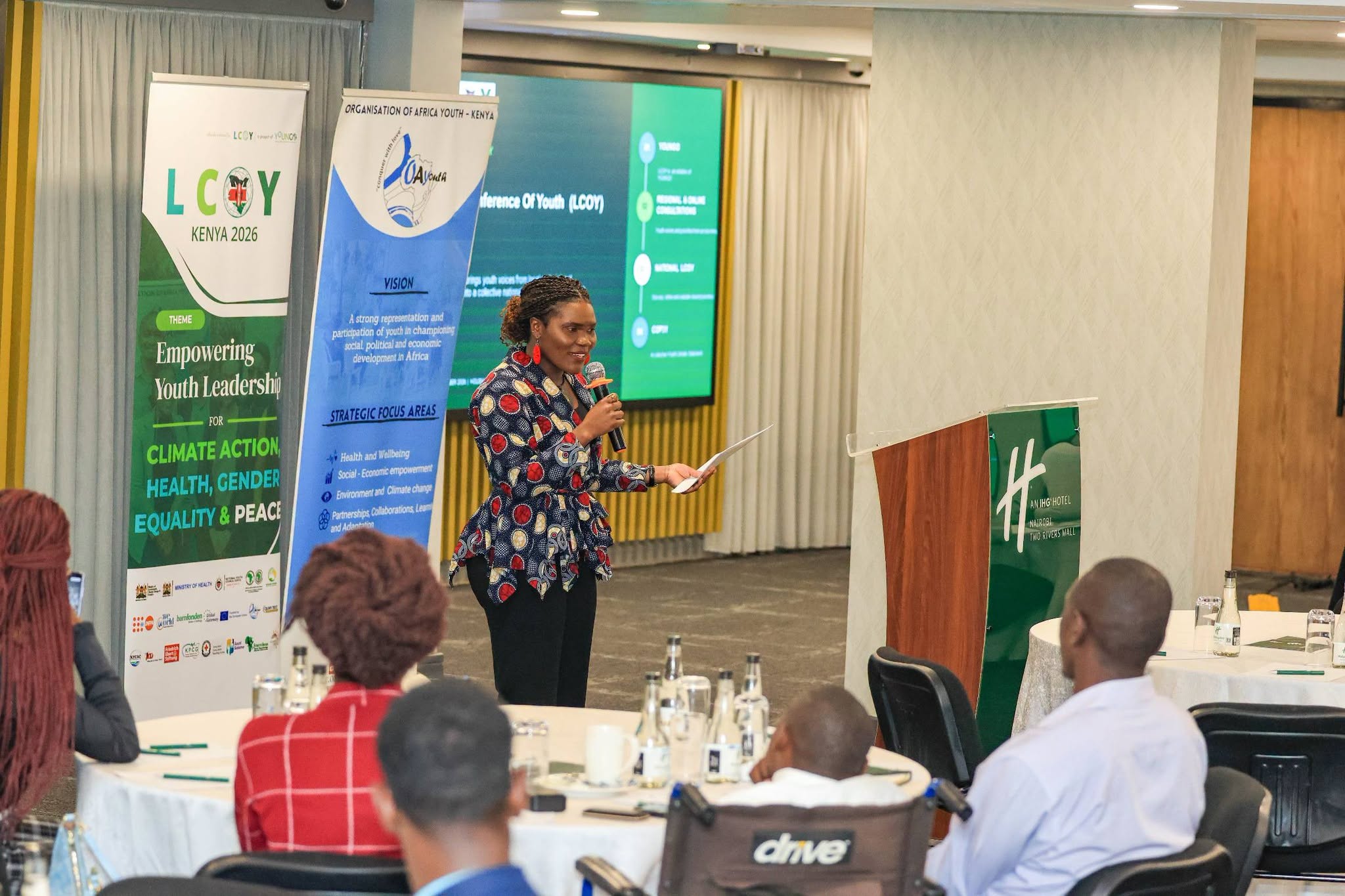
Young people have repeatedly called for greater involvement in decisions that affect their future, especially on climate change. On June 23, 2026, that call took a significant step forward with the launch of the Youth Green Manifesto at CORAT Africa in Karen, Nairobi. The launch brought togeth
Young people have repeatedly called for greater involvement in decisions that affect their future, especially on climate change. On June 23, 2026, that call took a significant step forward with the launch of the Youth Green Manifesto at CORAT Africa in Karen, Nairobi.
The launch brought together a diverse group of stakeholders, including representatives from political parties, government institutions, civil society organisations, development partners, the media, youth-led organisations, environmental advocates, innovators and young people representing grassroots organisations from across the country. The gathering created a platform for dialogue on how young people can play a more meaningful role in shaping Kenya's environmental future while contributing to national development.
Developed by the Organization of African Youth (OAY) under the Erasmus+ Our World, Our Planet Project, the manifesto reflects the voices of more than 3,000 young people and youth leaders from 60 youth organisations who participated in consultations, forums and capacity-building activities between 2024 and 2026.
Rather than being a declaration of aspirations, the document presents practical, evidence-based policy recommendations that call on national and county governments, development partners, the private sector and other stakeholders to work alongside young people in addressing climate challenges.
Why the Youth Green Manifesto was developed
Kenya continues to experience prolonged droughts, floods and other climate-related challenges that affect livelihoods, food systems and infrastructure. While young people are among those most affected, they often face barriers to participating in climate governance, accessing climate finance and benefiting from green economic opportunities.
The manifesto was developed to bridge these gaps by ensuring that youth voices are not only heard but also reflected in policies, financing mechanisms and national development priorities.
It is informed by several youth engagement processes, including the First National Youth Climate Action Innovation Summit, the Erasmus National Youth Forum and the Just and Sustainable Urbanisation Platform (JSUP) Harmonised Survey Report.
Conversations that shaped the launch
Beyond unveiling the document, the launch created space for discussions on some of the country's most pressing environmental and governance issues.
Participants explored why ecological sustainability should no longer be viewed solely as an environmental concern but as a governance, economic and development priority. Speakers noted that climate change affects agriculture, employment, health, infrastructure, education and the economy, making it an issue that should be integrated into national planning and political leadership.
Intergenerational panel discussions also examined how the aspirations captured in the Youth Green Manifesto can be translated into practical action. Participants discussed the importance of strengthening youth representation in decision-making, increasing investments in green innovation, improving access to climate finance and building partnerships that can help young people develop skills, create employment and implement community-led climate solutions.
The discussions also highlighted the role of collaboration between government, development partners, civil society, educational institutions, political parties and the private sector in supporting youth-led environmental initiatives through technical expertise, mentorship, funding opportunities and knowledge sharing.
The four priorities of the Youth Green Manifesto
The manifesto is organised around four broad policy pillars that identify where young people believe action is most needed.
1. Climate financing for youth
The document proposes establishing National and County Youth Climate Funds to support youth-led climate adaptation, green enterprises and environmental innovation. It also recommends simpler grant application processes, stronger business support systems and increased investment in renewable energy, waste management and circular economy initiatives.
2. Meaningful youth participation in climate governance
Young people are calling for permanent representation in climate governance structures, stronger public participation mechanisms and greater involvement in policy development and implementation at both national and county levels.
3. Digital innovation and green jobs
The manifesto encourages investment in climate technology, digital infrastructure, renewable energy, green skills and youth innovation to prepare young people for opportunities emerging within Kenya's green economy.
4. Gender equality and inclusion
Recognising that climate change affects communities differently, the document calls for gender-responsive policies, improved access to productive resources, safer public spaces and stronger support for women participating in climate action and green enterprises.
A shared commitment beyond the launch
A shared commitment beyond the launch
The launch was not only about presenting recommendations but also about building a shared commitment among stakeholders.
Participants pledged to continue strengthening collaboration across sectors, recognising that no single institution can address climate challenges alone. The event reinforced the need for partnerships that mobilise resources, expand training opportunities, support innovation, strengthen youth leadership and create pathways for young people to contribute to climate solutions in their communities.
The manifesto itself also outlines commitments by young people to continue advocating for climate justice, engaging leaders, promoting accountability and documenting community-led environmental action.
How to be part of the conversation
How to be part of the conversation
The launch of the Youth Green Manifesto marks the beginning of a wider national conversation on youth leadership and climate action.
Young people, community organisations, government institutions, civil society organisations, development partners and private sector actors are encouraged to engage with the manifesto, support its recommendations and identify opportunities for collaboration. Whether through advocacy, innovation, policy engagement, environmental conservation or community projects, everyone has a role to play in advancing the vision outlined in the document.
As Kenya continues to confront the realities of climate change, the Youth Green Manifesto offers a practical roadmap for ensuring that young people are not only beneficiaries of climate action but active partners in shaping a greener, more inclusive and sustainable future.
Article by Lynet Okumu
Tags
Youth Green Manifesto for Climate Action in Kenya